🔒Открыть пост
и посмотреть медиа
и посмотреть медиа
Ссылка скрыта
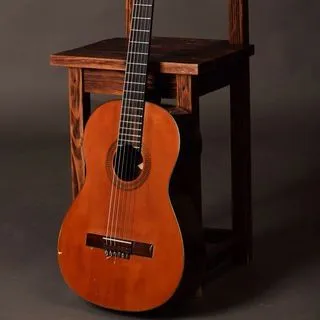
Мир классической гитары: ноты, уроки, концерты и записи.
Мир классической гитары: ноты, уроки, концерты и записи.
Канал для поклонников классической гитары. Содержит видео концертов, мастер-классы от известных гитаристов, ноты и табулатуры популярных произведений Баха, Сор, Таррега и других. Полезно для начинающих и профессионалов: уроки техники, репертуар и вдохновляющие записи. Все материалы для изучения и прослушивания.
Ссылка скрыта
Открыть канал и посмотреть медиаThe Pikasso Guitar Pat Metheny's request to Linda Manzer in 1984 was to build a guitar that had "as many strings as possible." Manzer came up with the Pikasso, a guitar with 42 strings and four necks that weighed almost fifteen pounds. A hexagonic pickup enabled Metheny to access his Synclavier synthesizer, and thus play on guitar anything that could be played on his synthesizer, including samples and other instruments. The Pikasso contains two holes for mounting the guitar on a stand, allowing the guitarist to play the guitar without having to hold it. Metheny plays the Pikasso on "Into the Dream," the first song on his album Imaginary Day. While building the Pikasso, Manzer invented the Manzer Wedge. Because the Pikasso was much wider than a normal six-string guitar, it was difficult for the right hand to reach all the strings. Manzer also wanted Metheny to be able to see all the strings while looking down at the guitar. She wanted a solution that left the sound unchanged. She settled on a wedge, something that is wide at one end and narrow at the other. The Pikasso introduced having the bass side of the guitar narrower than the treble side. Narrowing the body of the guitar made the strings easier to reach, and it made the guitar more comfortable to play. In the 1980s, she began adding the wedge design to all the guitars she made. Ссылка скрыта
Открыть канал и посмотреть медиаAdam Rafferty's Tips for Healthy Guitar Practicing 1) Make sure your guitar is comfortable to play. 2) Practice Finding the “Buzz” Point. Try this – play so light with your left hand that notes actually start to “buzz” from not pressing hard enough. Next, press just enough to make the buzz disappear. 3) Examine Your Hand Position. 4) Establish Your Stretching Routine 5) Learn to Breathe Deeply. 6) Take Breaks When You Practice 7) Have a Sensible Warm Up & Practice Routine. 8) Drink enough water! 9) Go for “beauty” rather than “to be the BEST.”
Открыть канал и посмотреть медиаFrank Martin, the Swiss composer whose only composition for guitar, Quatre Pieces Breves or 4 short pieces which appear on Julian Bream's landmark album 20th Century Guitar were written in 1933 for Segovia when Martin was still a struggling composer seeking recognition. Although given the recognition they deserved by Bream they were in fact written for and dedicated to Segovia. Their unfortunate history is described in an article by Jan J. de Kloe, published in the Summer 1993 issue of "Soundboard." Based on information provided by Martin's widow, Maria, the article describes the Martin-Segovia interaction as follows: Segovia lived awhile in Frank Martin's native city, Geneva, and Martin admired the guitarist. Maria Martin doesn't know if Segovia asked for a composition, or if Frank Martin took the initiative to write a piece for the guitarist. It is certain that Martin received pieces from Segovia written by Castel- nuovo-Tedesco as examples of how to write for the instru- ment. When Martin sent Segovia the resulting Quatre Pieces Breves, the com- poser never received any confirmation or thank-you note. When they crossed each other in a street one day, Segovia greeted Martin with a short "au revoir" and walked the other way as if to avoid a discussion. At this point Martin thought that may- be his piece was unplayable. At one point, Bream tentatively approached Martin about writing another piece for guitar. Unfortunately, Martin demurred. Ссылка скрыта
Открыть канал и посмотреть медиаThe Baroque guitar replaced the Renaissance lute as the most common instrument found in the home.The earliest attestation of a five-stringed guitar comes from the mid-sixteenth-century Spanish book Declaracion de Instrumentos Musicales by Juan Bermudo, published in 1555.The first treatise published for the Baroque guitar was Guitarra Española de cinco ordenes (The Five-course Spanish Guitar), c. 1590, by Juan Carlos Amat.The baroque guitar in contemporary ensembles took on the role of a basso continuo instrument and players would be expected to improvise a chordal accompaniment. Several scholars have assumed that the guitar was used together with another basso continuo instrument playing the bass line. However, there are good reasons to suppose that the guitar was used as an independent instrument for accompaniment in many situations. Intimately tied to the development of the Baroque guitar is the alfabeto system of notation. Ссылка скрыта
Открыть канал и посмотреть медиаOnline Translation of Preliminary Rounds of the XXXV GFA International Concert Artist Competition Ссылка скрыта
Открыть канал и посмотреть медиаVilla-Lobos Plays the Guitar for Segovia It was only natural that Brazilian composer Heitor Villa-Lobos would write for the guitar. And maybe it was inevitable that he would meet the world's greatest guitarist, Andres Segovia. But exactly what happened at that first meeting is not so certain because Villa-Lobos and Segovia gave sharply contrasting accounts of it. It happened in Paris in 1924. They were at a party given by a mutual friend. According to Villa-Lobos, Segovia didn't recognize him at first and remarked that the composer wrote music that was at odds with the guitar since it required impossible techniques. Then, according to Villa-Lobos, the composer introduced himself and asked what Segovia meant. The embarrassed guitarist replied that classical guitarists didn't use the little finger. "Well, if it isn't used," Villa-Lobos said, "cut it off." Then he asked Segovia for a guitar on which to demonstrate his techniques. When he reluctantly complied, Segoivia was astonished by Villa-Lobos' ability. After the demonstration Segovia took his guitar and left, refusing to see the composer on the following day, although he later commissioned an etude. Segovia tells it differently. According to him, he recognized Villa-Lobos at once and, when the composer borrowed the guitar, he had to try several times to begin playing it and finally gave up because his fingers had become clumsy from lack of practice. According to Segovia, despite the awkwardness of Villa-Lobos' playing, he knew at once that he was in the presence of a great musician because the chords were full of exciting dissonances and the melodic fragments were original. As for Villa-Lobos' unorthodox fingering, the guitarist found it ingenious. And above all, Segovia could tell that Villa-Lobs was "a true guitar lover." Whatever exactly happened on that night in Paris in 1924, two of the century's great musicians had come together and made a moment of musical history. By Norman Gilliland Wisconsin Public Radio.
Открыть канал и посмотреть медиаHeitor Villa-Lobos (March 5, 1887 – November 17, 1959) was a Brazilian composer, described as "the single most significant creative figure in 20th-century Brazilian art music". Villa-Lobos has become the best-known South American composer of all time. A prolific composer, he wrote numerous orchestral, chamber, instrumental and vocal works, totaling over 2000 works by his death in 1959. His music was influenced by both Brazilian folk music and by stylistic elements from the European classical tradition. His Etudes for guitar (1929) were dedicated to Andrés Segovia while his 5 Preludes (1940) were dedicated to Arminda Neves d’Almeida, both are important works in the guitar repertory. Ссылка скрыта
Открыть канал и посмотреть медиаYamandu Costa (b1980 in Passo Fundo) is a Brazilian guitarist and composer. His main instrument is the Brazilian seven-stringed classical guitar. Costa's diverse styles include chorinho, bossa nova, milonga, tango, samba and chamamé. Ссылка скрыта
Открыть канал и посмотреть медиаOnly registered users can share their opinion.
Be the first to share your impression of this resource!
The channel with free sports forecasts: singles, doubles, triples and HTFT.
Thai drama Beware Of the full moonpart Love Nettawin. Emotional stories and romance.

Bot anxiety👽Helps to cope with anxiety: tips, exercises and support in Telegram.